


With more than 40 years in the special application vehicle industry,


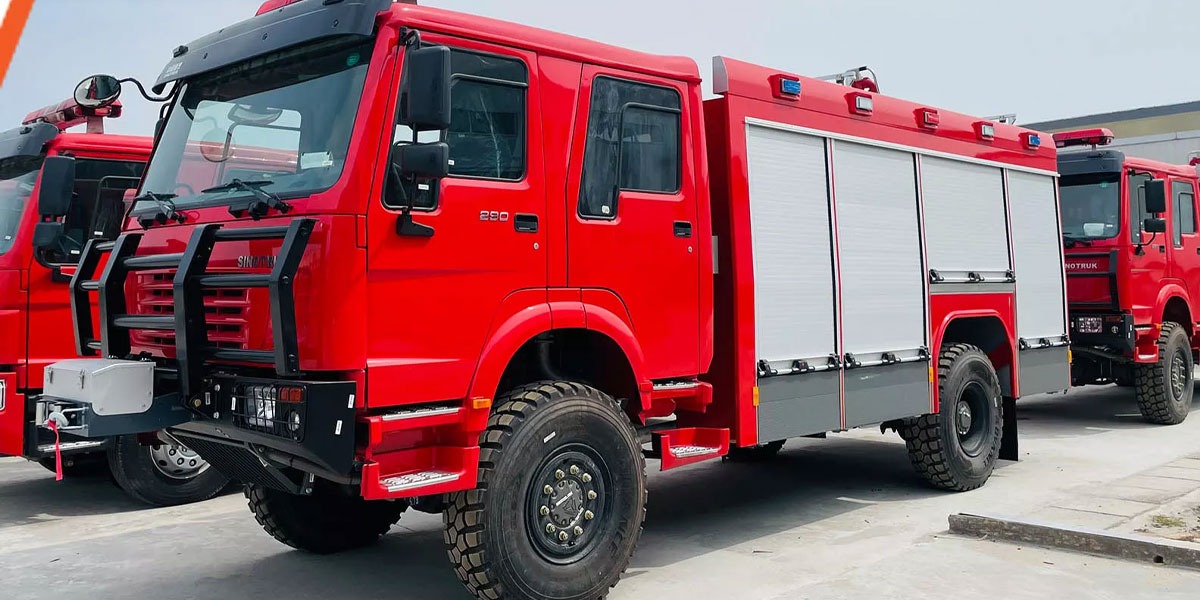
Fire trucks aren't like other vehicles. The wrong choice doesn't just waste money - it creates gaps in emergency response that show up at the worst possible time. Getting the specification right from the start is the only approach that actually makes sense.
One of the best-known advantages of using flatbed recovery trucks is that all four wheels remain securely positioned on the tractor’s platform. As the tyres do not touch the ground, there is no chance of unnecessary tyre wear or stress on the suspension and drivetrain. This kind of protection is useful especially for sports cars, luxury vehicles. Classic automobiles and vehicles that have developed some mechanical faults.
The first question anyone buying a fire truck should answer is: what does this vehicle actually need to do? That sounds obvious, but a surprising number of purchases are driven by budget or availability rather than operational requirements. The result is a truck that handles some situations well and others poorly.
A municipal fire department protecting residential streets needs something very different from an airport authority covering a runway, or an industrial plant protecting a chemical storage facility. Tank capacity, pump output, foam system capability, chassis strength, cab protection - all of these specs need to match the hazard profile of the site.
When looking at a fire truck for sale, the listed specifications only tell part of the story. The quality of the pump, the reliability of the foam proportioning system, the build standard of the water tank, and how well the vehicle performs after two years of regular use - these are things that only come from experience with the specific manufacturer or supplier.
A fire truck for sale at a significantly lower price than comparable options is worth scrutinising carefully. Fire apparatus is not an area where cutting costs on components pays off. A pump that fails under pressure, a tank that develops stress cracks, or a foam system that doesn't perform at full flow - these aren't workshop problems. They're emergency scene problems.
Certification matters too. Fire trucks sold into UAE and GCC markets need to meet specific standards. Buying a vehicle without verified compliance creates regulatory problems and may affect insurance coverage when the vehicle is actually deployed.
Looking at a fire truck for sale should also include after-sales considerations - spare parts availability, service support, technical training for operators, and what happens when something needs fixing outside normal business hours. Emergency vehicles don't get to schedule their breakdowns conveniently.
Dubai and the wider UAE have some of the tallest buildings in the world. Standard fire trucks reach a certain height and stop. For anything above that, aerial fire trucks are not optional - they're the only realistic response option.
Aerial fire trucks carry extendable platforms or ladders that allow firefighters and rescue teams to reach upper floors of high-rise buildings, access rooftops, and direct water streams from elevated positions that ground-based equipment can't achieve. For cities with significant high-rise density, having the right number of aerial units in the fleet isn't a luxury - it's a basic operational requirement.
Aerial fire trucks vary significantly in working height, platform capacity, and stabilisation systems. Some are designed primarily for rescue - getting people down from height. Others are optimised for fire suppression from elevation. Many do both. The right choice depends on the specific buildings and infrastructure the unit needs to serve.
The weight and size of aerial fire trucks also affects where they can operate. Narrow streets, underground car parks, weight-restricted bridges - these practical constraints need to be mapped against the vehicle's dimensions and axle loads before purchase. A truck that can't physically reach certain locations in its response area has limited usefulness.
Maintenance of aerial systems requires specialist knowledge. The hydraulics, the structural integrity of the boom or ladder, the platform controls - these need regular inspection and certification by qualified technicians. Buying aerial fire trucks from a supplier who provides this support matters as much as the purchase itself.
Meraj International supplies fire trucks and specialised emergency vehicles for industrial, municipal, and government clients across the region. The focus is on matching the vehicle specification to the actual operational requirement - not just supplying what's available.
Visit merajinternational.com to discuss requirements and get technical guidance on the right vehicle for the application. Fire apparatus is too important to buy on price alone.

With more than 40 years in the special application vehicle industry,